Pickleball Court Etiquette for Open Play
Master pickleball open play etiquette with these essential rules. From rotation systems to paddle stacking, play nice and make friends on the court.
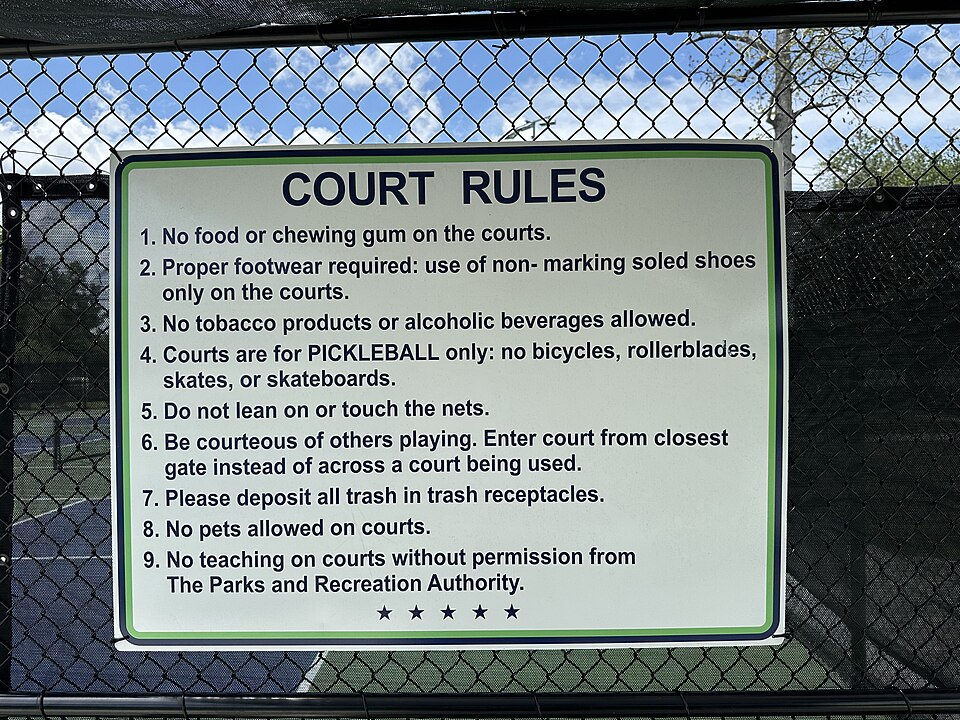
Why Open Play Has an Unwritten Code
Open play is how most people get into pickleball, you show up, there's a paddle queue or sign-up system, and you rotate in with whoever's there. It's a remarkably efficient format for getting strangers into games quickly. It works because players follow a set of unwritten norms. Know them when you arrive and you'll fit in immediately. Show up unaware of them and you'll be "that new player" the regulars quietly avoid.
The Rotation System
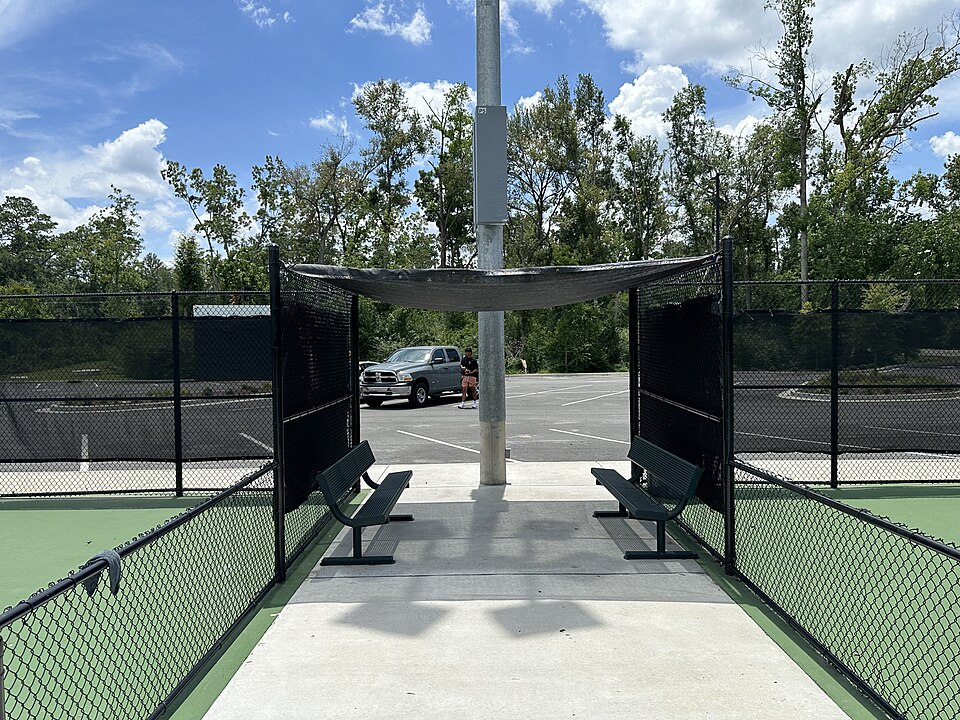
Most open play sessions use a paddle queue, you place your paddle on a rack, designated hook, or in a line. When a court opens, the next four paddles (or two for singles) play. When your game ends, your paddle goes to the back of the queue.
Rules That Get Broken
- Don't lurk near the court. Put your paddle in the queue and wait in the designated off-court area. Hovering at the gate is considered aggressive and regulars notice it.
- Don't cut the line. This seems obvious but happens, someone puts their paddle at the front under the guise of confusion. Regulars notice this too.
- If you need to leave, remove your paddle. Don't leave your paddle in queue when you've gone to your car. If a court opens and your paddle is next but you're nowhere to be found, the next paddles play or the session gets held up.
- Learn the local system. Some venues use winner-stays-on for competitive sessions. Some use challenge courts. Some have sign-up sheets instead of paddle queues. Don't assume it's the same as the last venue you played.
Call the Score Before Every Serve
This is the rule new players forget most consistently. Before every single serve, the server calls the score: server's score, receiver's score, and in doubles the server number (1 or 2).
The convention exists for a reason: it keeps both sides aligned on the score and prevents disputes. If you serve without calling the score and there's a disagreement, you have no baseline. If you call the score and someone disagrees, you sort it out before the point is played.
If you're not sure what the score is, ask before serving. Never serve a point while the score is unsettled. Ask, confirm, call it, then serve.
Line Calls: Make Them Fairly
The official rule and the community norm are aligned here: if the ball lands on your side, the call is yours. Call it honestly. If you're uncertain, the ball is in, close balls get the benefit of the doubt and play continues.
The player who disputes every close call, overrides their opponent's fair calls, or needs to relitigate each out ball becomes known in the local community, and not in a good way. Pickleball culture runs on trust between players. Honor it by calling your own lines fairly, even when it costs you a point.
If there's a genuine dispute where both sides are uncertain, replay the point. No argument needed, no score change, just replay.
Dispute Resolution
Disagreements happen. Someone's shot looked in to one player and out to another. Score disputes arise when no one's been calling it consistently.
The playbook:
- State your recollection once, calmly. "I thought that was out / I thought that was in."
- If there's disagreement with no clear resolution, replay the point.
- Don't argue past the initial exchange. Replay and move on.
- Don't get personal. Compete the point, not the person.
Players who handle disputes gracefully without drama are universally welcomed back. Players who turn every close call into a confrontation develop a reputation that follows them around the community.
Court Energy and Sportsmanship
Open play is a community event as much as it's a sport. The energy you bring to a session affects everyone on and around the court.
- Compliment good shots from either side. "Nice shot" is not weakness, it's sportsmanship, and it's the culture of pickleball. Experienced players do it naturally.
- Don't coach your partner mid-game unless they asked. Unsolicited mid-game coaching reads as condescending and disrupts the flow of play. Save feedback for after the session, and ask first.
- Don't slam your paddle. Occasional visible frustration is human. Repeated equipment abuse makes other players uncomfortable and can escalate tension.
- Keep rallies moving. Reset your position, call the score, and serve. Lengthy post-point analysis after every point slows the session down for everyone.
- Don't play hurt. If you're managing an injury and compensating in ways that affect your movement, be upfront about it. Players appreciate transparency, it helps them adjust their game and avoids misread situations.
Skill Level Matching
Most open play sessions are labeled by skill level. Respect the label. A 4.5 player hitting hard drives and targeting corners in a 2.5 beginner session is ruining someone's experience and probably wasting their own time.
If you're unsure what level the session runs: ask the regulars before joining the queue. They'll tell you honestly. They'd much rather have that conversation than have a skill mismatch disrupt a session.
If you're unsure of your own skill level: err toward playing down one level initially. You'll be welcomed, you'll contribute positively to those games, and you can move up as your game develops. The alternative, overestimating your level and overwhelming less experienced players, leaves a worse impression.
Court Navigation
Don't walk across active courts. Period. Wait for a break in play, a point ending, players changing sides, before crossing. This applies when retrieving a ball that rolled onto an adjacent court too. Call "ball on court" to alert the players, wait for a natural pause, then retrieve.
Loose balls on court surfaces are a safety hazard. Players take this seriously, especially on hard courts where falls are consequential. Show the same care you'd want others to show when your court is active.
When You're New
Most pickleball communities are genuinely welcoming to beginners. The sport has a culture of inclusivity that's fairly unique in racket sports. When you arrive somewhere new:
- Introduce yourself as new to the venue (or new to the sport)
- Ask how the rotation works at this specific venue
- Ask about skill level expectations for the session
Showing that you know the basic rules, want to play by the etiquette code, and are asking the right questions will earn you immediate goodwill. Most regulars will take a few minutes to orient a newcomer who's clearly making an effort.
Find Open Play Near You
Ready to get on the court? Search PickleballCurator.com to find pickleball courts and open play sessions in your area. Filter by indoor or outdoor, check court details, and show up ready to play.
Related reading: Also check out our guides on 5 essential pickleball rules for beginners and find pickleball courts near you.
Frequently Asked Questions
What are the unwritten rules of pickleball open play?
Key open play etiquette includes: call your own fouls honestly, rotate out fairly when players are waiting, don't dominate play if you're the strongest player on the court, warm up briefly before games, and be welcoming to new players.
How do you rotate in pickleball open play?
The most common rotation system is 'four on, four off' — when there are players waiting, teams play one game to 11 and then rotate off to let the next four players on. Some venues use a paddle queue system where players line up their paddles to indicate they're waiting.
Can beginners join open play pickleball sessions?
Absolutely! Most open play sessions welcome players of all skill levels. Some venues organize sessions by skill level (beginner, intermediate, advanced), while others are open to everyone. Don't be intimidated — the pickleball community is known for being welcoming to newcomers.
How long should a pickleball game last during open play?
A standard game to 11 points typically takes 15-20 minutes. During busy open play sessions, it's courteous to play one game and then rotate off if others are waiting. Some venues have specific time limits during peak hours.